Istrian peninsula - unexplored cities
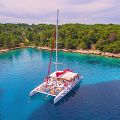
The region of Istria and the Istrian peninsula are located in the north of Croatia on the border with Slovenia. Istria is located on the largest Adriatic peninsula and is considered an attractive tourist destination in Croatia. Here is the largest number of beaches marked with a blue flag for the purity of sea water.
The Istrian peninsula is divided geographically into red, gray and white parts according to soil types.
Red Istria (Crvena Istra) occupies, first of all, the coastline of the peninsula and its central part. Terra rossa is a red soil type - very fertile soil. Quality Istrian wines such as malvasia, merlot, cabernet, teran originate from this part of Istria.
The remaining two regions are located in the central part of the region. White Istria (Bijela Istra) is the territory adjacent to the borders with Slovenia.
It is formed by white limestone karst and is the area with the rarest settlement in Croatia. The climate here is harsh and agricultural soil is scarce.
Gray Istria (Siva Istra) occupies the territory between the town of Labin, Cape Savudrija and Trieste in Italy. Its surface consists of clay rock (flysch). There are many picturesque medieval towns in Central Istria. The region is also broadly focused on agritourism, accommodation and recreation right in rural houses. This offer is used especially often by tourists from Western European countries, and therefore the services offered meet high standards.
However, most tourists visit the coast of Istria every year. Popular tourist sites are hotel centers and complexes on the Riviera Pula, Riviera Rovinj and Riviera Umag.
Here you will find a wide range of sports opportunities, the region as a whole is ready to satisfy the wishes of the most demanding customers. Nature lovers will certainly appreciate the nature reserve at Cape Kamenjak or Brijuni National Park.
One of my favorite cities in Istria is Rovinj. This city has long been recognized by tourists from all over the world. The town is quite promoted by travel agencies, and any excursions in Istria will definitely lead you to Rovinj
But there are also no less beautiful, or perhaps even more interesting ancient cities, which are located on the hills of Central Istria. I want to talk about them in more detail.
The fortified city of Motovun (Motovun), is known far beyond the borders of Istria as the "capital of truffles". This is a very picturesque medieval monument town in the valley of the Mirna river with a population of less than 800 people.
The surroundings of the city are an ecologically clean area, where there is no industry and harmful industries. From time immemorial, the inhabitants of Motovun have been growing olives and grapes. Here they make wonderful wine from the well-known varieties Teran, Pinot and Malvasia.
The city is not a popular tourist center, and many guidebooks undeservedly forget about it. Tourists who want to take a break from the noise of seaside resorts, the town attracts with idyllic views from the fortress walls of the fields, vineyards and Motovun forest, art salons and numerous restaurants that offer tasting gourmet dishes from black and white truffles. The settlement of Montovun on the site of the old settlement was first mentioned in a document of 804.
In the early Middle Ages, due to frequent barbarian raids, the inhabitants of the coast went to the interior of the peninsula and built fortified fortresses on the hills, protected by powerful stone walls. This is how the city-fortress Motovun arose, which formed its appearance in the XII-XIII centuries. Many of the surviving buildings of the old city on top of the hill are several hundred years old. Gradually growing, the city descended down the hill, and modern buildings are already beginning to scatter throughout the valley.
Motovun differs from many ancient medieval Croatian towns in its completeness, solidity. A well-preserved ensemble of old buildings on stone-paved streets creates a bewitching atmosphere. On many houses of this open-air museum, you will notice the image of a lion, the symbol of the city.
Different cultural epochs have left their traces here - in the city center a simple Gothic bell tower is adjacent to graceful Renaissance buildings.
The smallest city in the world is the Croatian town of Hum (Hum), in which 23 people live (more precisely, spend the night, since most of the inhabitants work outside of it). The Guinness Book of Records honored Hum with the title of "the smallest city in the world. "
A road leads to the city of Hum, known as the Alley of the Glagolitic alphabet, which is no less interesting than the city itself, along the road, monuments to the symbols of the Glagolitic alphabet are erected. A city appeared on the site of the ruins of an old Roman settlement. According to the legend, it was a joke of the local giants: after the construction of cities in the valley of the Mirna River, they had few stones left, from which they built the Hum fortress. The unique city-museum of Hum has almost a thousand years of documentary history.
Scientists believe that the fortress was built by Mark Count Ulrich I on the border of his possessions at a time when Istria was part of the French kingdom. For the first time, under the name of the fortress Hill (castrum Cholm), the city is mentioned in the donation of Mark Count Ulrich II, dated 1102. According to the document, Hum and several other castles were given to the Aquillian Patriarchate, to which it later belonged for three centuries. Until the 17th century, all documents referred to Hum as a fortress.
A visit to just such well-known but little advertised towns located in the interior of Istria will give you a complete picture of the culture and life of the people who lived in the medieval era on these beautiful lands.


